When a car key will not turn in the door lock, the reason often is not a broken key. It is a lock that has not been turned in years. If you normally unlock with the fob, the keyhole in the driver's door may have gone its whole life without a key in it, and dust, moisture and old grease have stiffened it in place. The first thing to try is not the key at all: put a fresh battery in the fob and see if the buttons work again. If they do not, check that you are using the right keyhole and the right blade, try every door that has a lock, and stop before you force anything. Here is the order to work through it, and who to call for each result.
If you are standing at the car right now
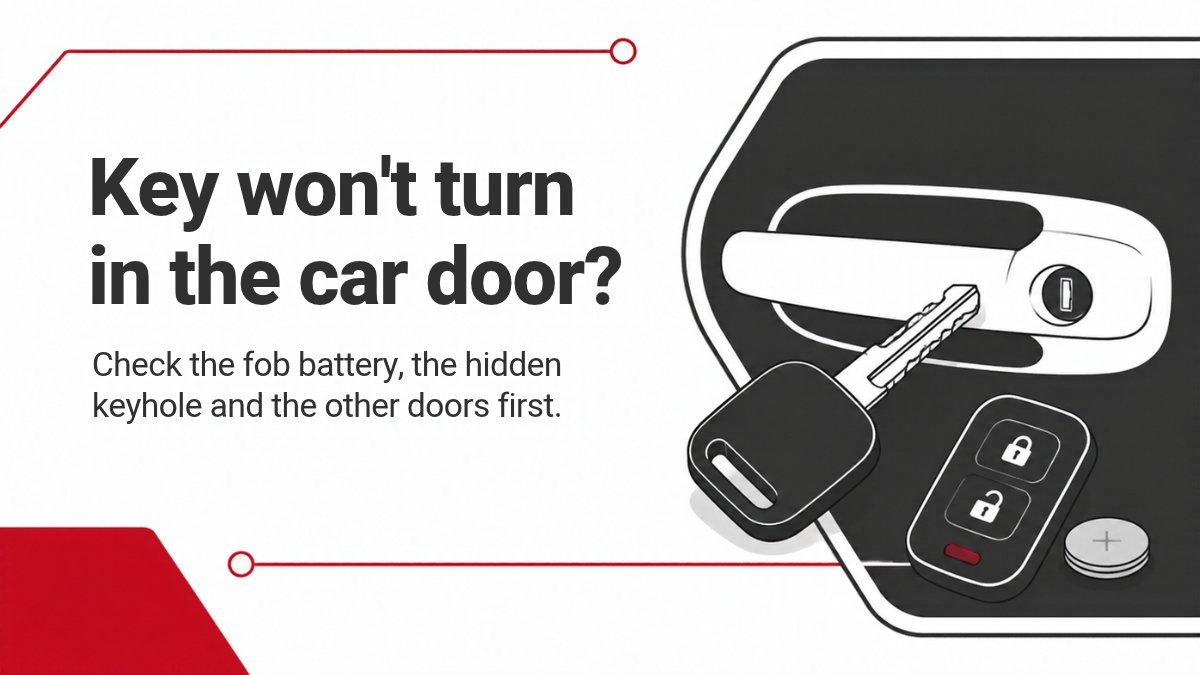
- Try the fob one more time, close to the door. A weak fob battery often still works from a foot or two away when it no longer works from across the parking lot. Hold it near the driver's door handle and press unlock.
- Replace the fob battery if you can. Most fobs take a flat coin cell, and the size is printed on the old battery. Gas stations and drugstores usually carry the common sizes. If the fob works after a new battery, the door lock was never the problem, but read the section on unused locks below before you forget about it.
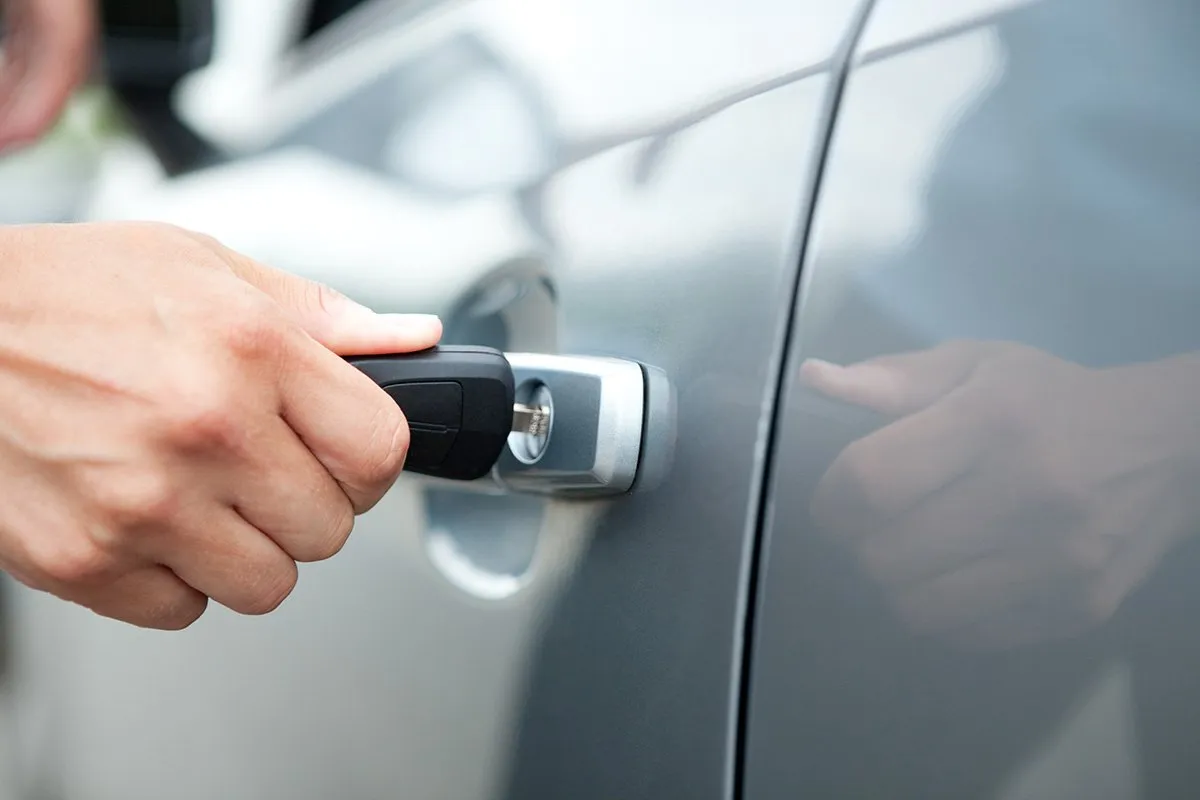
- Make sure you have the key blade, not just the fob. Many fobs hide a metal emergency key inside. It usually slides out after you press a small release button or slider on the fob. Your owner's manual shows where.
- Find the actual keyhole. On a lot of push-button cars, the driver's door keyhole is hidden under a plastic cap at the end of the handle. The owner's manual shows how to take the cap off, and it is designed to come off with the tip of the emergency key.
- Try the other locks. Many newer vehicles only have a keyhole on the driver's door. Older trucks and cars often have one on the passenger door and the trunk or tailgate too. If another lock turns, you are in, and the problem is limited to that one door.
- Turn gently in both directions. Some doors unlock with a turn toward the front of the car, some toward the back. Light pressure only. If it does not move with the pressure you would use on a house key, stop.
If none of that gets you in, this is a lockout, not a repair you can finish in the parking lot. Call a locksmith before the key bends. A bent or broken key in a door lock turns a simple job into a key extraction and often a new key as well.
Why a lock nobody uses stops turning
Every guide on this problem lists the usual suspects: a worn key, a worn lock, dirt, a bent blade. Those are real, and we cover them below. But on newer vehicles with remote or push-button entry, the story is often simpler. The owner has unlocked the car with the fob every day since it was new, so the door lock has never been turned. The emergency key has never been used either.
Inside the lock are small spring loaded parts called wafers that line up with the cuts on the key. When they sit in the same position for years, the factory grease dries out and gets tacky, and fine dust works its way in through the keyhole. The first time anyone needs that lock, usually on the day the fob battery dies, the wafers are stuck where they have been sitting. The key goes in, but it will not turn.
Around Corinth this happens on vehicles parked outside through humid summers and wet winters, and on anything that spends time on gravel or dirt county roads. Frozen locks, which a lot of national guides lead with, are only a problem here on the occasional hard freeze. A lock that has simply never been used is far more common.
What the key is doing tells you what is wrong
Pay attention to exactly what happens when you try the key. Each symptom points somewhere different.
| What happens | Most likely cause | Who fixes it |
|---|---|---|
| The key goes in all the way but will not turn at all | A stiff, unused lock, or a lock that is worn inside | A locksmith, to get you in and then service or repair the lock |
| The key will not go in all the way | The wrong blade, debris in the keyway, or a bent key | Check the blade first, then a locksmith |
| The key turns a little, then catches | A worn key, or a worn lock | A locksmith; try a spare key to tell which |
| The key turns all the way, but the door stays locked | The rod or clip inside the door has come loose, or a door part has failed | Usually a mechanic or body shop, since the door panel has to come off |
| The key works in the ignition but not the door | The door lock is worn or stiff from lack of use | A locksmith |
Is it the key or the lock?
If you have a spare key, try it in the same door. If the spare turns and your everyday key does not, the everyday key is worn or bent, and the fix is a new key. If neither key turns, the problem is inside the lock.
A word on spare keys: do not get a worn key copied at a kiosk. A copy machine traces the key you hand it, so it copies the wear along with the cuts. A locksmith can cut a new key to the original factory dimensions instead. And if the key has a chip in the head for starting the engine, the new one has to be programmed to the vehicle as well. Our car key replacement guide explains which keys need programming and what is involved.
What not to do
- Do not force it or use pliers on the key. Car key blades are thin, and the emergency blade in a fob is often thinner. Once one snaps inside the lock, the broken piece has to come out before anything else can happen.
- Do not spray WD-40 or household oil into the lock. Wet oils hold dust and make a gummy lock worse over time. If a lock needs lubricating, use a small amount of a lubricant made for locks.
- Do not pry at the door, the window or the weatherstripping. It is easy to damage the paint, the glass seal or the wiring inside the door, and that repair costs more than a locksmith visit.
- Do not pour hot water on the lock. On the rare morning when a lock here really is frozen, hot water runs into the door and refreezes. Use a lock de-icer, or wait for the sun to warm the door.
What a locksmith does with a door lock that will not turn
There are two separate jobs, and it helps to know which one you are asking for when you call.
Getting you in
If you are locked out, the first job is opening the vehicle without damaging it. That is a standard car lockout call, and it is part of our automotive locksmith services. Once you are in, you can start the car with the key or fob and keep going with your day.
Fixing the lock
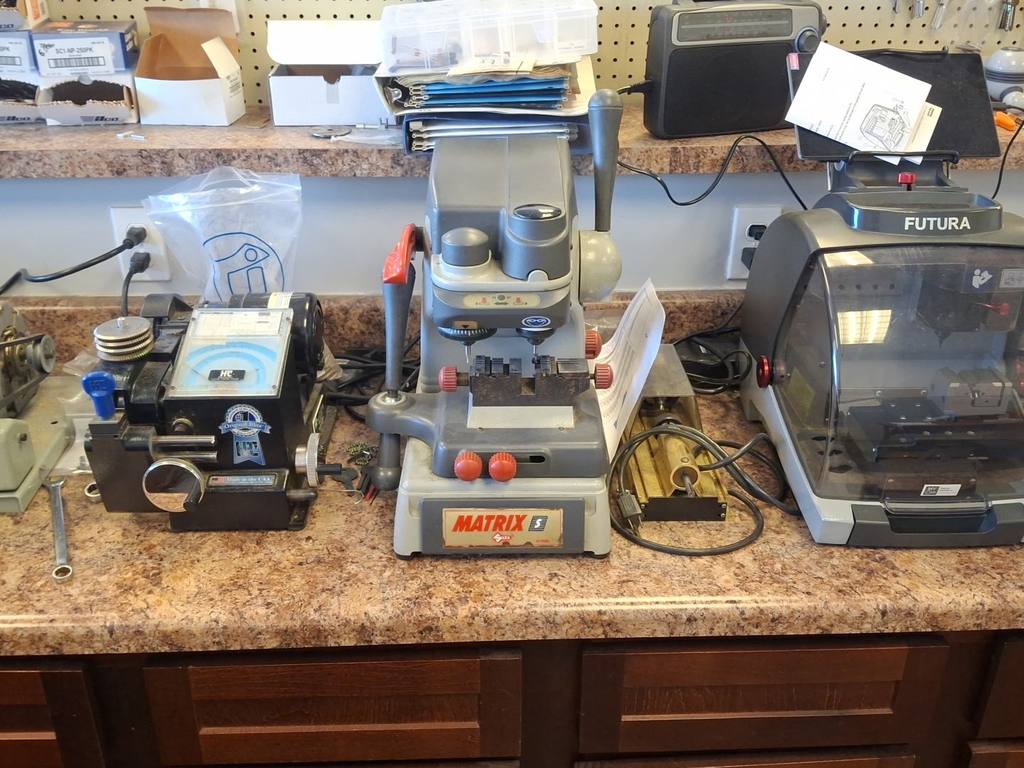
The second job is making sure it does not happen again. Depending on what the lock looks like inside, that can mean cleaning and lubricating it, repairing the worn parts, or replacing the lock with a new one keyed to match your existing key, so you are not left carrying two keys for one vehicle. If the key itself is the worn part, the answer is a new key cut to factory spec. Tell us the year, make and model when you call so we can tell you what to expect.
Keep the door lock working for the day you need it
- Use the door key a few times a year. Slide out the emergency key, unlock and lock the driver's door with it, and put it back. It takes thirty seconds and keeps the parts inside moving.
- Know where your keyhole is. If it hides under a cap on the handle, practice taking the cap off once in daylight, not for the first time in the dark.
- Replace the fob battery before it dies. If you have to press the button twice, or get closer to the car than you used to, the battery is getting weak. Most push-button vehicles also have a backup way to start with a weak fob battery, and the owner's manual shows how.
- Keep a spare key that works. A spare made while your key is still in good shape is far cheaper than starting over after the only key is gone. Our key duplication service handles that, and you can bring the fob in to have the battery checked at the same time.
Still cannot get the key to turn?
Call us at (662) 331-6186 and tell us the year, make and model, where the vehicle is, and exactly what the key does when you try it. We will tell you whether it sounds like the key, the lock, or a part inside the door, and what the fastest way to get you back in is. Our shop is at 100 N Fillmore St in downtown Corinth, and we work across Kossuth, Rienzi, Glen, Farmington, Booneville, Iuka and Baldwyn. See our service areas, or send us a message if it can wait.